

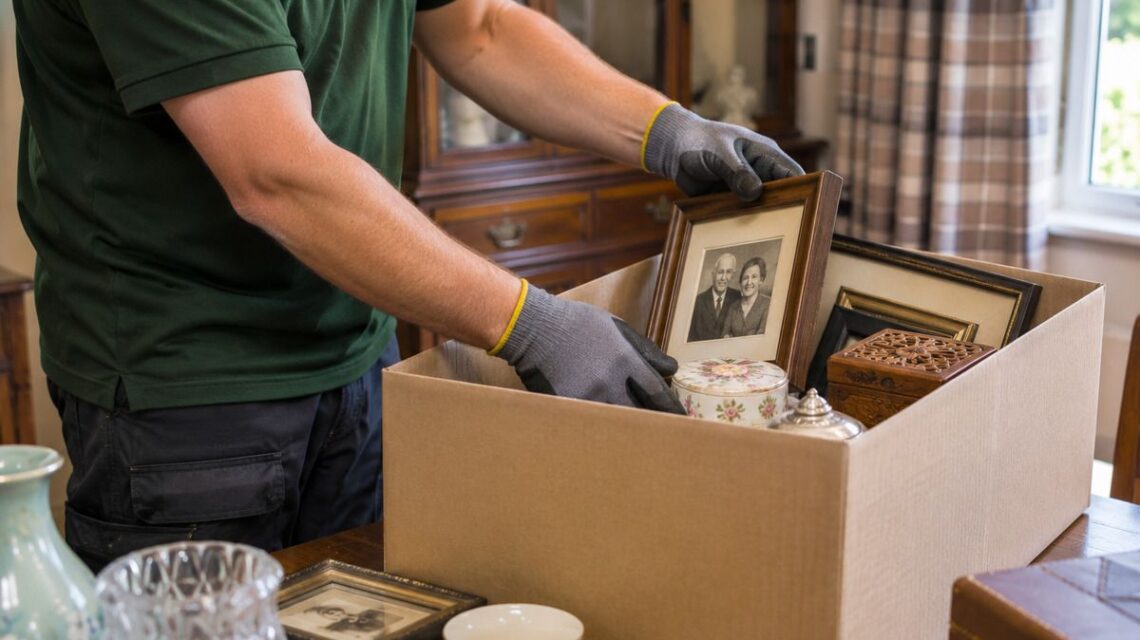
Clearing the home of someone who has died is one of the hardest jobs a family faces. There is grief, there are decisions about belongings, and there are legal steps that work differently in Scotland from the rest of the UK. This guide sets out the practical side so you know what to do first and what can wait.
This is general guidance, not legal advice. If the estate includes a house or you are unsure about your role as executor, speak to a solicitor.
Scotland uses confirmation, not probate
In England the court grants probate. In Scotland the executor applies to the sheriff court for confirmation, the document that gives them authority to deal with the estate. To apply, the executor lists everything the person owned in an inventory, which can include furniture and personal belongings.
That matters for a clearance. Before anything leaves the house, make sure you know who the executor is and that they agree to the clearance. If the contents could be valuable, value them before they are sold, donated or disposed of.
Before the clearance: what to look for
Families often worry about losing something important among a lifetime of belongings. Go through the house, or ask us to set aside anything we find, for:
- wills, deeds, bank and building society papers, pension and insurance documents
- keys, bank cards, cheque books and cash
- photographs, letters, medals and family papers
- jewellery, watches and anything that may need valuing
- items named in the will for particular people
Take your time. There is rarely any need to rush, unless you are clearing a rented or council home with a deadline.
If the home was rented from Aberdeen City Council
When a council tenant dies, Aberdeen City Council gives the estate two weeks rent-free to clear the property, and a longer period can be considered case by case. If the family or executors cannot clear it, the council clears it and charges the estate. Speak to the council early if you need more time, and get the clearance booked as soon as you have a date.
If the home was privately rented, check the tenancy agreement and talk to the landlord or letting agent about a realistic date.
If the house is being sold
A house usually sells better empty and clean. Many families keep a few pieces of furniture until it is valued or photographed, then clear the rest. If a solicitor is handling the sale, check with them before the clearance so it fits the timetable.
What happens to the belongings
Nobody wants a parent’s belongings simply thrown in a skip. Good-condition furniture can often go to Aberdeen charities and reuse shops, and metals, electricals and cardboard can be recycled. Tell us anything the family wants donated to a particular cause and we will do our best to make that happen.
How we help families in Aberdeen and Aberdeenshire
- Quotes from photos. Send a few photos of each room through our quote form. We give you a free price without ever needing to visit before the clearance, which helps when family live far away.
- You don’t need to be there. If you can’t be there on the day, you can arrange to leave us a key.
- We set things aside. Paperwork, photographs and anything that looks personal or valuable is kept to one side for you.
- Clear pricing. If the job needs more than one van load, extra loads are charged at a reduced rate on the day.
Read more about our bereavement clearance service. If the property also needs specialist cleaning, see our specialist clearance page.